Maintenance plan: how to price small edits without friction
Small edits are cheap in execution but expensive in interruptions. This framework helps agencies package routine updates clearly, protect margin, and give clients faster outcomes.
Small edits are cheap in execution but expensive in interruptions. This framework helps agencies package routine updates clearly, protect margin, and give clients faster outcomes.
A two-minute request usually creates a ten-minute context switch: locate the page, validate on mobile, run cache checks, and answer follow-up requests. Multiply that across clients and your production calendar gets fragmented.
Most pricing friction starts here: clients expect instant changes, agencies need protected focus blocks. A good maintenance plan aligns both realities.
Use your own assumptions
This planning estimate prices the handling chain, not only the visible copy change.
Planning note: this excludes account management, rush premiums, structural work, and the value of uninterrupted production time. Replace every default with your own operating data.
See the Editly workflowIf you do not define scope, scope will expand by default. Keep your definition operational and easy to reference.
Contract-ready small-edit scope
This model protects the relationship because both sides can predict delivery.
| Model | Best fit | Primary control |
|---|---|---|
| Credits | Solo practice or low request volume | Number and size of requests. |
| Time bucket | Growing studio with varied edits | Monthly handling capacity. |
| Tiers | Agency portfolio and repeatable delivery | Scope, response time, and review depth. |
Best when requests vary but stay easy to classify. Define examples: one CTA change might be one credit; coordinated copy across five pages might be five. Avoid a complex tariff that takes longer to explain than the work.
Best when trust is established and the work is unpredictable. Include a minimum billing unit, what happens to unused time, and a clear top-up rule.
Best when response time carries real value. Differentiate tiers by service outcome—response window, review depth, number of sites—not by an arbitrary feature pile.
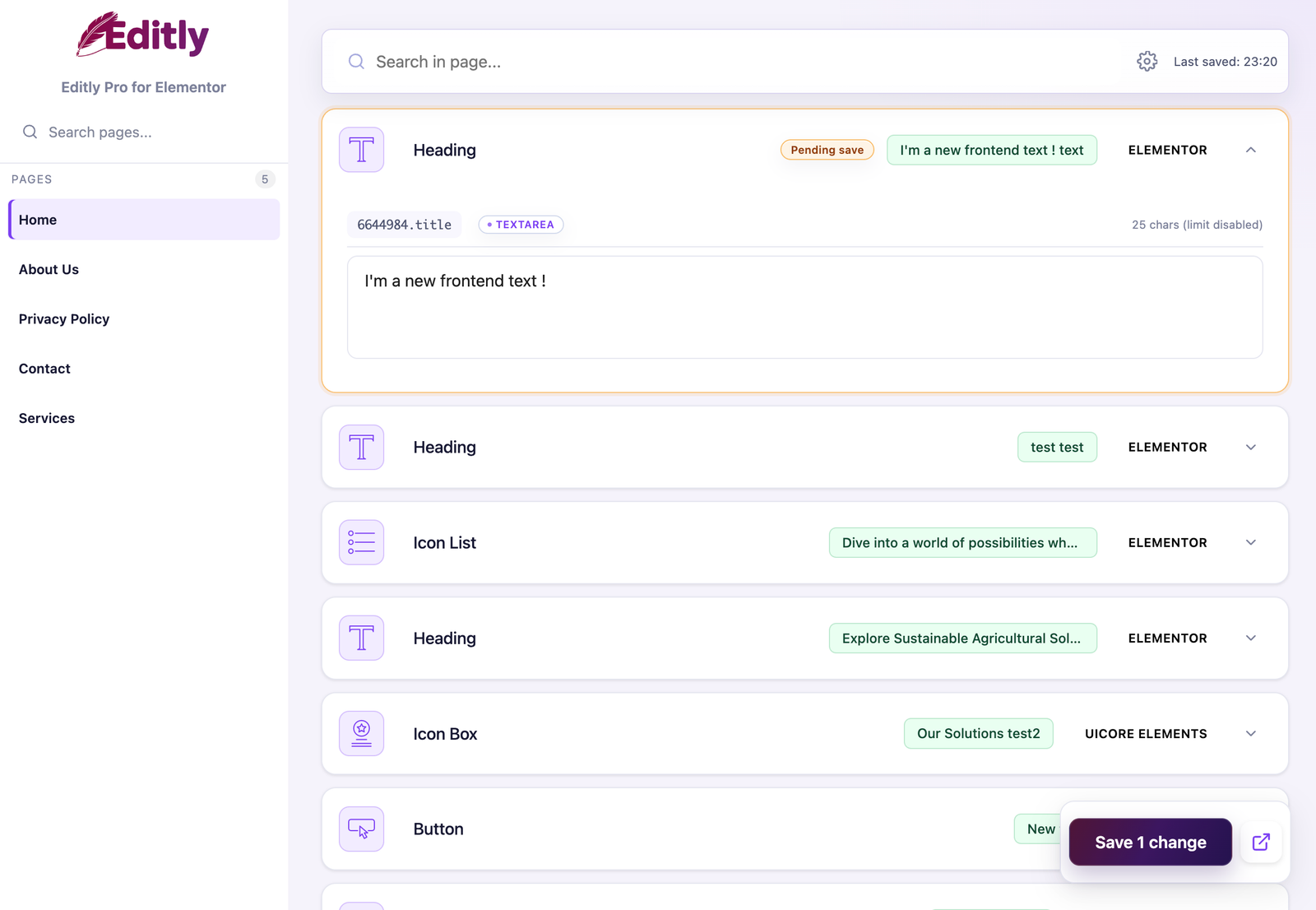
The strongest maintenance plans remove low-value manual actions from your team. Give clients a safe path for routine copy edits in wp-admin, while your team keeps control of design and structural decisions.
For implementation references, use Builder stays intact, Audit log, and White label when client-facing governance is needed.
Then align the scope decision with Free vs Pro comparison.
“You can update routine copy directly in wp-admin whenever you need to. We remain responsible for layout quality and structural consistency. When a change needs design or validation work, it moves into your maintenance allowance and we confirm the timing before we start.”
Measure one month of real interruptions before setting the package. Then define the self-service boundary, your minimum viable response window, and the work that always requires a separate quote.
Editly for Elementor
Give suitable copy changes a safe self-service route and keep higher-value work inside a clear service boundary.
You can change or withdraw your permission at any time. Necessary cookies remain active to remember your choice and secure the service.
Remember your privacy choice and enable essential functions.
Remembers local preferences and adapts the experience to site usage.
Allows Google Analytics only after your permission. Advertising use remains disabled.