Why you should stop offering “unlimited changes” (and what to offer instead)
“Unlimited changes” sounds flexible and client-friendly, but in production it usually means undefined scope, recurring interruptions, and delivery stress for everyone involved.
The core issue is not client behavior. It is offer design. “Unlimited” removes boundaries, so every request feels valid regardless of urgency, complexity, or business impact.
Unlimited website changes or revisions may sound client-friendly, but over time they erode production focus, creative quality, and margin.
That leads to constant context switching and weak prioritization. It also trains clients to treat the site as permanently in-progress.
Most text changes should not require you
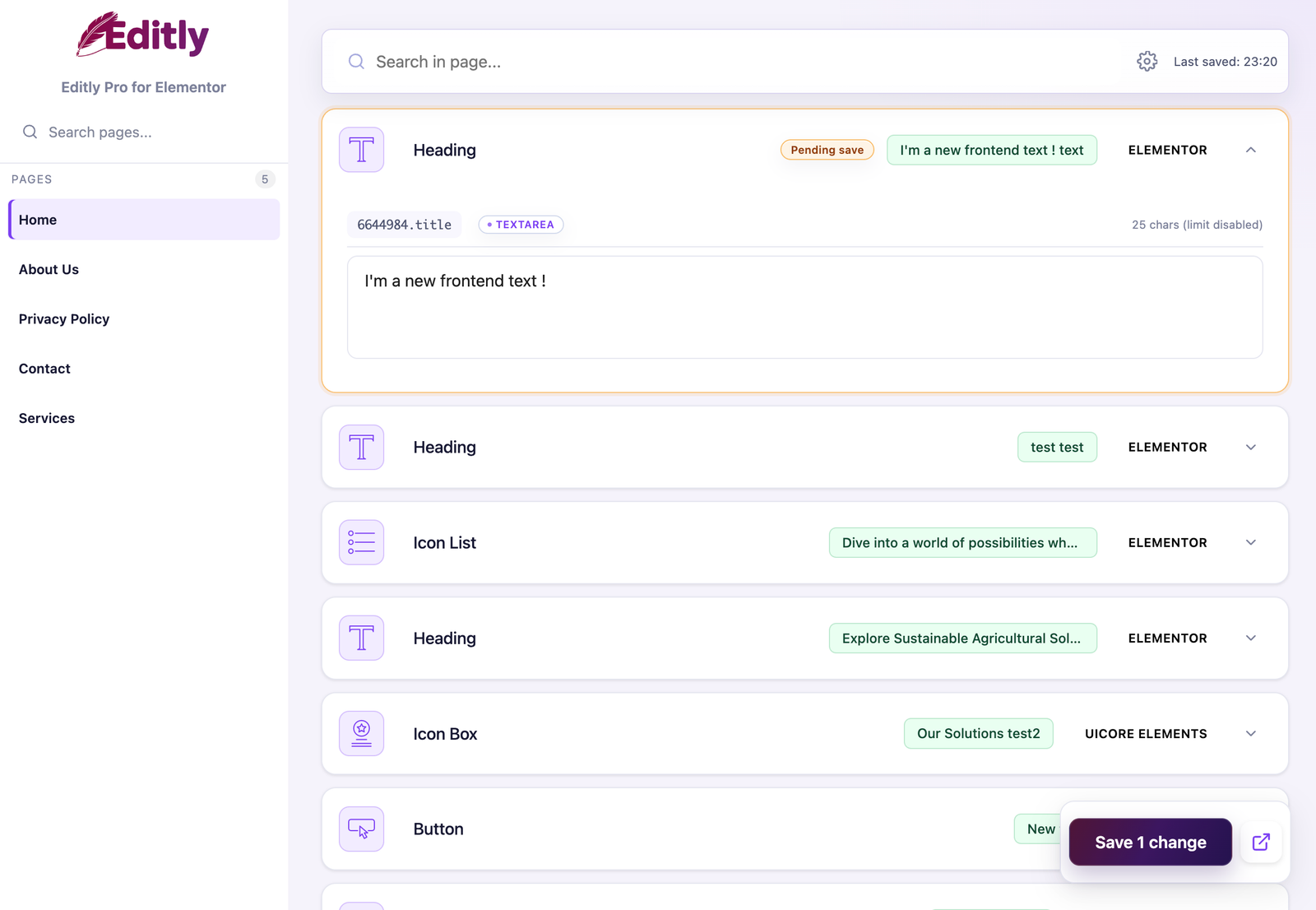
Focused editing: clients see the content work that belongs to them, rather than the entire builder.
If clients still need you for every headline change, the handoff model is incomplete. A better approach is to let them run routine copy updates through a client-safe Elementor editing layer in wp-admin, without giving Elementor access to layout controls.
That keeps agility high and support debt low.
What to offer instead
What to offer instead
A clear self-service editing scope for routine copy tasks.
A monthly support allowance with explicit boundaries.
Prepaid support blocks for ad hoc complex changes.
A maintenance plan with routine and urgent lanes.
One handover document explaining responsibilities.
This model is not less flexible. It is more predictable for both sides.
A simple three-lane replacement
Self-service: supported routine copy through Editly.
Maintenance: copy requiring execution, QA, or coordination within a defined allowance.
Project work: new sections, redesign, templates, integrations, and structural changes.
How to package the offer without sounding rigid
Positioning language
“Routine copy updates are available to your team in wp-admin. Your plan also includes a defined support allowance for changes that need our execution or review. New layout and feature work is scoped separately so we can confirm cost and timing before starting.”
Proposal clause you can adapt
“Included changes cover edits to existing copy and media within the agreed monthly allowance. New layouts, components, pages, integrations, or changes to responsive behavior are estimated separately. We will flag out-of-scope work before any additional cost is incurred.”
If multiple people edit content, use Audit Log for traceability. For agency-facing handover consistency, reference White Label.
What about third-party widget ecosystems?
If your client stack includes add-on packs, confirm the actual editable fields up front. Pro’s universal schema engine broadens third-party widget coverage, but custom and dynamic controls still deserve a real-site test before they enter the self-service promise.
Final takeaway
Unlimited edits sounds generous because it avoids a difficult conversation at sale time. A clearer offer has that conversation early, gently, and in writing—before either side is frustrated.
FAQ
Replacing unlimited changes with a better model
Usually no, if scope is explained as quality and speed protection rather than limitation.
A scoped self-service model plus monthly support allowance is often more sustainable.
Use concrete examples: what clients can edit today, what requires agency intervention, and response expectations.
Not necessarily. Fit support scope to site complexity, contributor count, and update frequency.
When you need white label, audit visibility, or broad third-party widget compatibility in daily operations.
Yes. It is especially useful for freelancers because interruption cost is higher on solo workflows.
Editly for Elementor
Move routine edits out of the support queue
Give suitable copy changes a safe self-service route and keep higher-value work inside a clear service boundary.
By default, the site uses only necessary cookies and storage. With your permission, it can also remember preferences and measure audience activity with Google Analytics. Learn more.
Your Global Privacy Control signal was detected: optional storage remains disabled unless you explicitly choose otherwise.
Privacy
Manage my preferences
You can change or withdraw your permission at any time. Necessary cookies remain active to remember your choice and secure the service.
Necessary
Remember your privacy choice and enable essential functions.
Personalization
Remembers local preferences and adapts the experience to site usage.
Audience analytics
Allows Google Analytics only after your permission. Advertising use remains disabled.