“Can you just update this real quick?” and other dangerously polite client requests
The request is friendly. The cost is rarely small. One “quick” change may be five minutes, but ten fragmented requests in a week can break your production rhythm.
The request is friendly. The cost is rarely small. One “quick” change may be five minutes, but ten fragmented requests in a week can break your production rhythm.
Small edit requests look harmless in isolation: change one sentence, swap one image, fix one link. Operationally, they create context-switching tax. That tax compounds faster than most freelancers expect.
The hidden cost is not the edit itself. It is interruption, queue fragmentation, and re-prioritization of deep work.
These requests are rarely aggressive. They are polite and framed as “just one quick thing.” That social framing makes it hard to refuse and easier to absorb repeatedly.
The client is usually not trying to exploit the relationship. They simply cannot see the setup, validation, cache checks, and context switching behind the visible edit. Instead of saying no, make that work legible and give the request a defined path.
Create two lanes: routine edits that can be batched, and urgent edits with visible criteria. “The founder asked” is not a criterion; legal exposure, broken checkout copy, or a live campaign deadline might be.
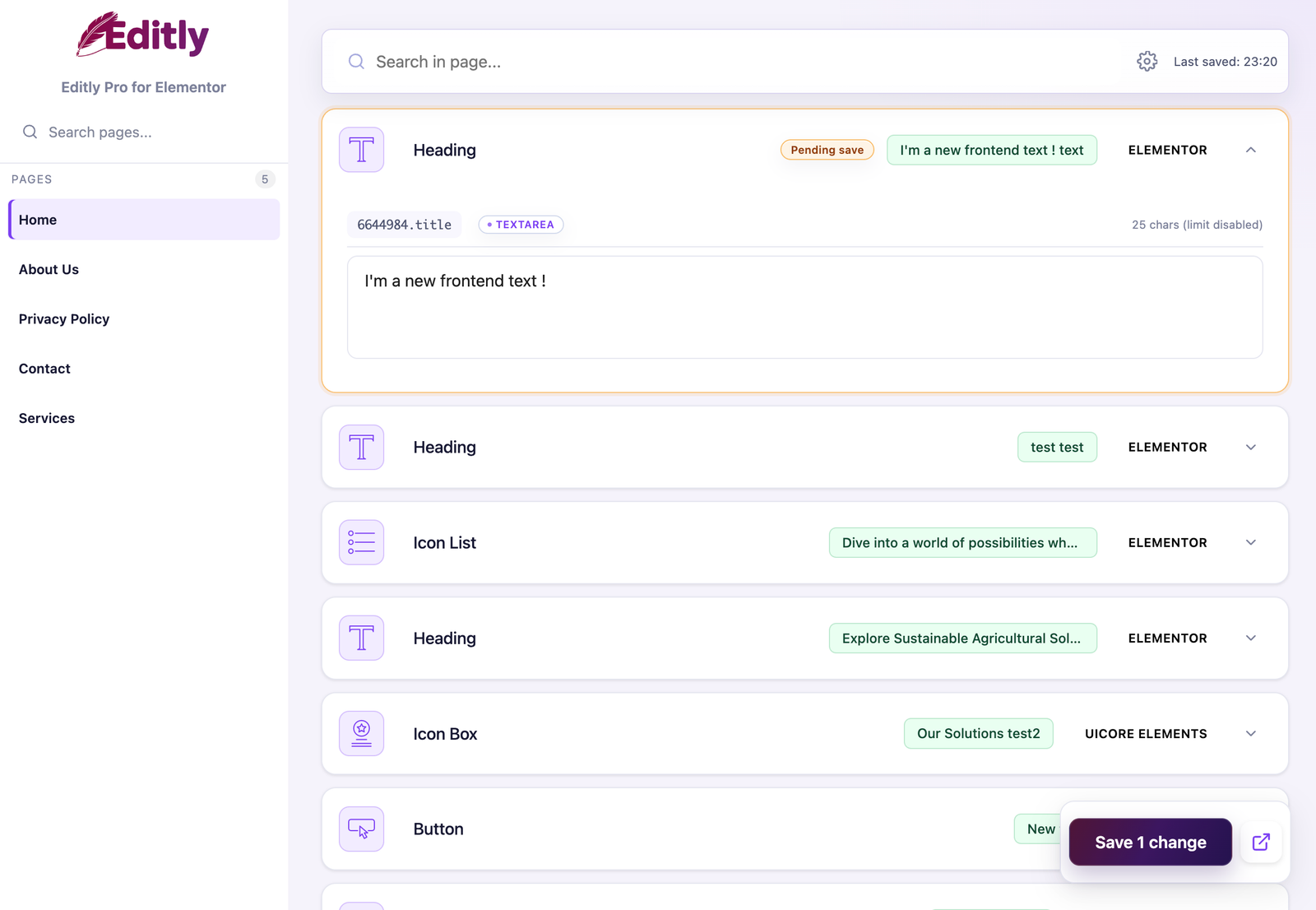
Use a client-safe Elementor editing lane where users can edit text in wp-admin without giving Elementor access to structural controls.
For multi-editor environments, use Audit Log to simplify handoffs and reduce “who changed this?” loops.
If a request touches design, templates, or component behavior, escalate to the agency delivery lane.
Support offer options
Make the choice easy: self-service for supported copy, a maintenance lane for execution and review, and a scoped quote for design or structural work. The Free vs Pro comparison can help you define the technical boundary without turning the conversation into a feature list.
Start with a weekly edit window, one urgent exception lane, and one escalation contact. Put the rule in the proposal, repeat it at handover, and make the safe route easier to use than a private message to the project lead.
If clients work across add-on widgets, verify compatibility scope through third-party widget support.
You do not need harsher communication. You need a kinder system: one that respects the client’s urgency, makes hidden work visible, and protects the focus required to do good work.
Editly for Elementor
Give suitable copy changes a safe self-service route and keep higher-value work inside a clear service boundary.
You can change or withdraw your permission at any time. Necessary cookies remain active to remember your choice and secure the service.
Remember your privacy choice and enable essential functions.
Remembers local preferences and adapts the experience to site usage.
Allows Google Analytics only after your permission. Advertising use remains disabled.